Tuesday, June 25, 2024

“He was inevitably curious and amazingly nonjudgmental.”


I just finished reading every single word of the Ed Wilson edition of the Wake Forest magazine. I cried. I laughed. I took breaks to read his favorite poems. Most of all, I marveled at how much the Wake Forest I experienced as a student was shaped by his vision for the University.

I am so lucky to have been a part of the Wake Forest community when I was. I had long conversations with, and dinners at the houses of so many legends, like Ed Wilson, Tom Mullen, Tom Phillips, David Hadley, Ed Christman, James Barefield, Dean Hamilton, Richard Carmichael, Father John, and Mike Ford. Reading these tributes to Ed Wilson, one thing kept coming back to me and linking all these people together – kindness. Ed Wilson was a true intellectual, but more importantly (to his legacy and to himself) he was kind. He grew up as a southern boy in a small North Carolina town in the 30’s and 40’s. He had every excuse to be racist and limited in his view, but he led the University to inclusion, brought luminaries like Martin Luther King, Ralph Ellison, and Maya Angelou to campus, and oversaw the University’s separation from the Southern Baptist Convention. He founded the extensive study abroad program and encouraged students to become true citizens of the world. He brought the arts to Wake Forest and found as much joy at an orchestra performance as he did at a basketball game. This legacy has made Ed Wilson a “larger than life” figure at Wake, but one of the secrets to his success is that he was always just another member of the community.

As a teacher I could have no better guiding light than Provost Wilson. If I can treat my students with his kindness and communicate my subject matter with his love, I will be a tremendous teacher. There are so many inspirational nuggets of wisdom in the magazine’s tributes to Dr. Wilson, but one stood out to me. Dr. Peggy Smith said of Ed, “He was inevitably curious and amazingly nonjudgmental.” For the rest of my career, one of my goals will be for students to think the same of me. Thank you, Dr. Wilson, for your years of love and service to the university and to your students, and for your inspiration to me personally that will continue for many years to come.

Friday, January 13, 2023

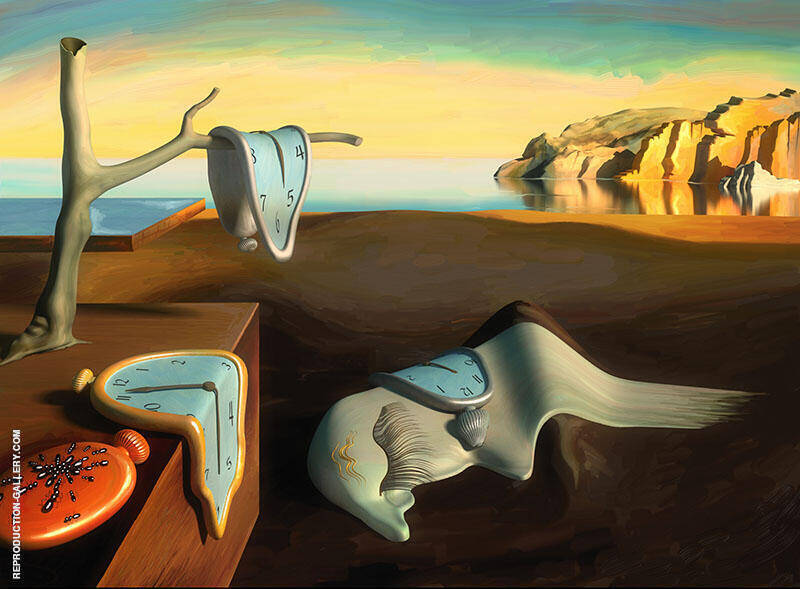
The Persistence of Memory

(This post has nothing to do with the awesome Dali painting of the same name!)

All memory is selective. Very few people remember every detail of everything that has ever happened to them (I’m looking at you Marilu Henner!) Tonight I’ve been thinking about how that happens. How do we select what memories to keep vividly in the front of our brains? How do we decide what to bury in the murky depths? Are those memories that we’ve selected real or did we construct them from pieces of the truth to build a more interesting/positive/useful/coherent-with-our-personal-biases memory?

This ruminating began because of something I posted to social media. I recalled that, on my first day as a teacher, my principal told me, “We have a lot of good kids in this school, but remember – good kids make poor decisions every day. They’re still good kids.” I put that in quotation marks even though there is absolutely no possibility that I remember the quote word-for-word. I very clearly remember the meaning of what Sister Helen Marie said to me that day, though, so the specific details of my dubiously constructed memory really aren’t that important, are they?

One of my early mentors replied with a wise quote from his first principal. Obviously he doesn’t remember the quote perfectly, but that doesn’t matter. He remembers the meaning.

This led me to think about my memories and to wonder how authentic they actually are, both the good and the bad ones. As somebody who has felt sometimes-crippling anxiety through most of his life, I can vividly remember many experiences that feed that anxiety. I wonder, though – are those true memories or things my brain has constructed along with the ever-present anxiety? I can still feel very real feelings of guilt when I think about the time I was somewhere around seven years old on a family vacation to Myrtle Beach. We went to play minigolf, as you do at the beach. Some of the holes were constructed in the familiar way where there are multiple intermediate holes that you can aim for and each has a tube that brings the ball to a good or bad spot on a lower green. When we got to the 18th Hole, I noticed that the cup was not a regular cup, but a tube, so I assumed it led to a lower green that I could not see. I had my mother’s ball in my hand and dropped it in the hole to see where it would come out. Instead it disappeared, because it was the last hole, and the balls go to a container to be retrieved later. I felt so guilty about taking away my mother’s chance to play the last hole that I still feel it to my core when I remember that day now. Was it a big deal? No. Did anybody else in my family remember that incident for more than 5 minutes? Probably not. Did anybody react at the time like it was a big deal? I have no idea – it doesn’t matter. I, in my child brain, felt like it was a big deal, so that memory was forever imprinted on my brain with that emotion.

The details of memory seem to be completely unreliable, but the feelings and lessons last for a lifetime. As I work with students, I need to remind myself of that. When that same student interrupts my planning block for the nth time to ask a question about the homework, I need to remember that, 20 years from now, they will not remember any of the details about what I said or what problems we worked on, but they will remember how I made them feel. When I interact with the people I love, I need to remember that the tone is more important than the syntax. As somebody driven by anxiety, I also need to be more forgiving of myself and understand that the overwhelming memories of how I felt in some situations are just as unreliable. The late, great Wake Forest professor Maya Angelou is often credited with saying, ““I’ve learned that people will forget what you said, people will forget what you did, but people will never forget how you made them feel.”

I take that quote as both an admonition and a caveat. I need to think about how my interactions with people will make them feel, because that is the long-term takeaway. I also need to remember that how people made me feel is a product of my own anxiety and not necessarily the intended result of what they said or did. I frequently tell people to “assume positive intent” when interpreting what other people say or do. Now I just need to figure out how to make the subconscious part of my brain do that when storing away these long-term memories!

Friday, October 21, 2022

Life is Incredible

One day this week, I was walking back to my dormitory apartment after cross country practice and bumped into a student of mine. He is an incredible young man who lives on the island of Manhattan and has an amazing relationship with his younger brother (who lives on my hall of the dorm.) I was rushing a bit to see my fiancée before heading back to watch the varsity girls’ soccer game, so I was not really in the right mind at the time to hear what he said. It has been taking up space in the back of my mind ever since, which means it’s time for another blog post.

This student (we’ll call him Peter to protect his privacy), was throwing a football with friends, but intercepted me and said, “I’ve been thinking since we talked in class the other day. You’ve lived an incredible life.” My mind immediately went to thoughts like – Incredible? Maybe incredible that I can pay my bills each month without going into debt. Incredible? My tiny apartment with faux-wood floors, drop-ceilings, and a tub/shower that is so permanently stained that it is impossible to tell what the original color was, might disagree. Incredible? My big night out (when it’s possible to fit it in) is grocery shopping on Saturday night with my fiancée. My life may be satisfying, happy, and exactly what I want it to be, but incredible? Certainly not.

Peter then went on to talk about different stories I’ve told in class and how he connected with them. That got me thinking about these last 50 (cough! choke!) years. And you know what? They’ve been pretty incredible.

I grew up as a faculty child at a boarding school where everybody looked out for everybody and we kids had the run of the campus. As a child, I met students from around the world and got a global perspective few kids have, especially in Lynchburg, Virginia. Throughout my school years, I was blessed with teachers I still learn from today. When I skipped second grade, I needed to learn cursive writing in the summer, and did so at the kitchen table of Jackie Meador, who was much more than a teacher to me. A decade later, I learned Latin at that same table from Max Meador, who was recovering from brain cancer but still took the time to discuss Virgil with me a few times each week (and life, and all the amazing things in his home office – I’ll never forget that banjo!)

In high school, I had the opportunity to travel to Italy, England, and Scotland through the generosity of my grandmother Lucy, a teacher herself, who wanted to give me those worldly experiences. From my grandparents, I learned to shoot the rapids in a canoe, fly-fish, appreciate the rich and neglected history of Southern Illinois, and enjoy the perfection of cinnamon-baked apples on biscuits.

In college, I had a wealth of opportunities I one day hope to deserve. My scholarship paid for me to backpack around Germany in the summer of my freshman year. While that trip was intended to be academic, it was much more personal in reality. I learned how to be alone with myself and how to be self-reliant. I learned how to connect with strangers, but to maintain a safe distance at the same time. I learned that lard on bread is salty and gross, but sleeping alone in a thousand-year-old castle overlooking a cute town can be the most awe-inspiring experience. The following summers, my scholarship paid for more traditionally academic experiences. I learned how big advances are the result of thousands of small steps, and you should never discount your contribution, no matter how small it seemed.

Life after college has seemed predictable. I settled on the safe route of following my parents into teaching in boarding schools. I wanted to give my children a similar experience to what I had growing up in that kind of community. While that was absolutely the right decision and I wouldn’t change a thing, I never really thought of my experience as incredible. I simply got through each day as best I could and hoped for the best. When I look back, though, it WAS pretty incredible.

I’ve lucked into the opportunity to meet people like Carl Sagan, Sandra Day O’Connor, Margaret Atwood, Marian Wright Edelman, Desmond Tutu, John Lewis, Ibram X. Kendi, Nancy Pelosi, Paul Ryan, Davis Phinney, and George H. W. Bush. I’ve also lucked into the opportunity to meet equally incredible, but less famous people, like Steve Castle, Vaughn Winchell, Damian Walsh, Cara Transtrom, Perry Epps, Saka, Brigid Kemmerer (okay, she’s pretty darned famous at this point), Madison Hughes (famouser and famouser by the day), Chris Kim, Kim Olsen, Leigh-Anne Krometis, Grace Barnhart, Stafford Graham, Sarah McKinley Austin, Paul Blake, Mason New, Natasha Wanjiru, Olivia Tucker, LizaBanks Campagna, Luiji Vilain, Molly Pugh, etc., etc., etc. I’ve watched my own children grow into amazing young adults with the kind of courage I’ve never had.

While my students get excited about the stories I can tell about an active shooter across the street from my daughter’s day care, my participation is a failed rescue of a drowning victim, and my successful participation of a rescue of two mountaineers in a blizzard, what I get excited about is the people I have met along the way. This has been a pretty incredible life so far, and I hope there are many more years to come. The secret is to keep learning and to keep challenging yourself. Even more importantly, you have to be open to opportunity. When something new and different comes along, say YES and challenge yourself to learn everything you can from that opportunity. If you take those opportunities, while life may seem pretty mundane while it’s happening, when you look back on everything you’ve done, all the people you’ve met, and everything you’ve learned, you’ll discover that life is pretty darned incredible and worth every minute of it!
Tuesday, August 16, 2022

Happy New Year!

 It is nowhere near January 1, and although Rosh Hashanah is rapidly approaching, I am not referring to that Happy New Year either. My fellow teachers know exactly what I mean - Happy New SCHOOL Year!

It's been a tumultuous couple of years. First, I chose to leave a school where I had lived and worked for 20 years. (I could write many posts about why.) I moved on to the school where I had dreamed of teaching for my entire career. That year was a true turning point in my career/life. It is a great school and exactly the right place for many students to discover their passions and prepare for elite colleges. It just wasn't the right fit for me. I need a smaller school with a very small, tight community. I need a school that adapts to meet the needs of the current students rather than one that puts the standards first and pushes students to meet them. I worry that I haven't phrased that well. Both schools have very valid ways of approaching education, but I fit my new school better. My new school meets each student where they are and pushes them to be more than they thought they could be. It's not just the school motto, it's also something they do every day. I LOVE that focus on the individual student.

I've now been living on the campus of my new school for just over a week and have really enjoyed meeting new people and starting to find my place in the community. I can't wait for the students to arrive and really get started on our mission. To all my fellow teachers out there, I hope you have as amazing a fall as I am confident that I will have! Enjoy the last few days of your summer!

Friday, July 29, 2022

Coming soon - Vanquished is the Foe!

Every once in a while you have an experience that leaves you thinking, “The world is changing for the better.” Today was one of those days. I wrote recently about “Steve,” who tragically took his own life 19 days ago at the age of 21. Today I attended his memorial service with hundreds of other people whose lives he touched in that short span. As one would expect, the service was emotionally devastating, but I came out of it very optimistic.


My optimism actually started when I first read the official statement by Charlie’s family about his death. (Steve was one of the many nicknames Charlie went by.) It was phrased very similarly to what you tend to read when somebody dies of cancer. It stated that, after a long and valiant battle, Charlie died of the disease of Depression. Yes, Charlie took his own life, but I found that phrasing incredibly important. He didn’t die of suicide; he died of Depression – an extremely common disease which is only just beginning to be treated as such.


The service focused on Charlie’s kindness, his humor, his humble passion. His friends and family talked about his love for music and sports and helping others. His willingness for playing the guitar for his friends when he was still in the early stages of learning inspired those around him to do the things they loved unapologetically and without worrying about making mistakes or being embarrassed. His was a life of joy, surrounded by incredible friends and a loving, supportive family. He also suffered from a chronic disease whose treatment is different for every patient and even different day-to-day for any given patient.


While the speakers today focused mainly on their love for Charlie and the times they shared with him, they also gave glimpses into the different ways that they are dealing with their grief. Geordie – a good friend from high school – has spent time gathering with his and Charlie’s mutual friends to support each other and talk through this tragedy together. Charlie’s sister, Grace, has found comfort in her faith and how her relationship with Charlie brought her closer to her God. His other sister Abby expresses herself through art and processed her grief by creating a video compilation of music, images, and film which showed the many sides of her brother throughout his life. His college fraternity brother, Mack, mentioned the bracelets that his fraternity has made, featuring Charlie and the phrase, “Check on your friends” to bring the discussion of Depression into the open on their campus. Katherine, who was a high school classmate of Charlie’s, talked about not actually being that close with him in school, but getting to know him only a month before his death as they worked together to support the school’s post-pandemic “mega-reunion.” She reminded us to take time to appreciate the connections and communities we share even when we don’t recognize them at the time. Her words introduced the hymn “On Our Way Rejoicing,” which every student at the school has sung before every vacation for many years. My one big disappointment of the day was that we all sang the hymn very respectfully, rather than the way students traditionally sing it, boisterously shouting certain verses. The shouting would have put a smile on Charlie’s face.


The most painful, beautiful, and hopeful part of the service today, though, was the reflection by Charlie’s father. As a parent myself, I don’t know how he found the strength to get through his words. First he thanked his family for the love they have given to Charlie and for the strength they have given him through the years and especially through this tragedy. He talked about his love for Charlie and his memories of the “best son you could ever ask for.” The second half of his reflection, though, is what really got me thinking about how the world is becoming a better place. He spoke confidently and with pride about Charlie’s valiant battle with the illness of Depression. He urged everybody present to look deep into themselves and to admit without any shame if they needed help. He talked about the importance of getting treatment and proudly announced that he would be starting to work with a therapist this week to get the “long overdue” help he needed for his own struggle with Depression.


After the service, there was all the usual talk during the reception. “So great to see you, but I wish it could’ve been under different circumstances.” Just as common, though, was talk of the reality of Depression, the necessity of getting help, the recognition that, if someone as filled with joy and as surrounded by love and support as Charlie fell victim to that disease, we all could. Hundreds of people today talked openly about Depression, mental illness, getting help. The one topic that was nowhere to be found was shame. These young adults are going out into the world, facing all the challenges our generation has left for them, and they are talking about Depression as the disease that it is – something that could affect anybody, and something that carries no more shame than any other disease. As somebody who has struggled with Anxiety and Depression throughout his life and only had the courage to get help in his 40s, this gives me so much hope. I doubt we’ll ever find a true cure for Depression, but I believe the generation currently turning from teenagers into adults is the generation that will make it a treatable disease – something that is identified much more quickly than it is now, and that is controllable so that you can live a long and happy life with it. A life without shame, knowing that even in the darkest times, there is a way out. We aren’t there yet, as Charlie’s loss has made painfully clear, but we’re getting closer. One thing I’ve learned as a teacher is that, when young people get their minds set on changing the world, it’s best to get out of their way and try to support them as best you can. I hope my generation will listen to these young people and get out of their way. They ARE making the world a better place and one of the greatest privileges of my life is that I get to cheer them on from the sidelines as they go. If we had sung “On Our Way Rejoicing” properly today, we would have shouted the line, “Vanquished is the foe!” I left today’s service optimistic that we will soon be shouting that line about the foe of Depression. It may never go away, but I believe this generation will remove the shame, open up the conversation, and truly vanquish the foe.

Tuesday, July 12, 2022

The Stages of Why?


My vaguely annual post to this blog will have a different tone this year. I’ve been processing things for a couple of days and it’s time to try to work through my swirling thoughts in writing. The picture above is my group from the freshman backpacking trip in the fall of 2015 (I think – too many complicated thoughts to do math right now.) This was one of my favorite “Burch” groups of all time. (Burch is the name of the alum who gave the money to start the program.) For a few years after, people would ask me who was in my Burch group and then, when I started naming names, they would almost invariably say, “Oh, THAT Burch group!” This group got along a little TOO well, if you know what I mean. It was all normal teenager stuff, and pretty mild at that, but the group was notorious because of it. What I remember is a group that gelled really well, where everybody got along and supported each other when times got tough along the trail. I’m sure selective memory is blurring the usual trail struggles, but overall this group was a blast. The kid in the red shirt on the far right, with the toothbrush in his mouth, is “Steve.” Over five days on the Appalachian Trail, that toothbrush only left his mouth when he was eating.

I taught Steve and hiked many miles on the trail with him that year. In future years, I was his faculty advisor and his lacrosse coach. I saw Steve in so many different parts of his boarding school life. Even after graduation, I often ran into him when he came to hang out with my next door neighbor, one of his best friends and the kid in the camouflage shirt and blue hat in the center of the picture. The Steve I knew was one of those people who are always positive. He was quick to smile and was always ready for a little fun. On the lacrosse field, he was a coach’s dream. He loved the game and just wanted to play. Whatever you asked him to do, he said, “Sure, Coach,” and ran out on the field to give it everything he had. Everybody knew and liked Steve. He was a good student, although not a straight-A student. The college application process didn’t go perfectly for him, but he ended up at a school he loved (and where I think his sister also attended.) Steve was just one of those all-around great kids who didn’t necessarily have a niche where he stood out, but was good at everything and his presence in any situation made it happier and more fun.

This past Sunday night, Steve took his own life.

---------------------------------------------------------------------------------------------

People talk a lot about the stages of grief. I think a more appropriate framing of my thoughts might be the stages of questions. (Please don’t interpret that as a lack of grief. A good amount of time passed between my typing the last paragraph and typing this one as I wrestled with emotions.) The first stage of questions all revolve around “Why?” Why would he do this? Why did somebody who always seemed so happy feel so helpless? Steve had a loving family, close friends, a bright future. Why would he do this?

The second stage corresponds to the anger stage in other frames. Why didn’t anybody stop this? He had so many people who were close to him. How did they miss the signs?

The third stage is where I’ve been living today. Why didn’t I stop this? How did I miss the signs? Why didn’t I work harder to stay in touch with Steve after graduation? Why was I so quick to assume that he was doing great? Should I have seen the signs? Of course I should have seen the signs! I knew him in the classroom, on the field, in the dorm, in chapel, at seated dinner, on the trail. I had more opportunities than anybody else to really connect with him and I blew it. I assumed he was okay. I assumed he had a good support network. I assumed he had people closer to him who were eager to help him if needed and with whom he would be more comfortable sharing any struggles he had. The third stage of questions is very self-centered and unproductive, but working through it is an important step in the process.

I started writing tonight because I am ready to move on to the fourth stage, and writing is the best way for me to get there. This fourth stage involves accepting the permanence of the questions. Why did I assume Steve had a good support network and people who were closer to him? Because he did. He had an incredible network of friends, many of whom have come together to support each other this week as they struggle more directly than I with many of these same questions. Steve had an amaing, supportive family who understood his strengths and weaknesses and wanted him to be the best he could be as long as he was happy. We may never know the answer to why, but self-blame is not helpful.

Finally stage five. The big question here is, “What can I do, moving forward, to honor Steve’s life?” For me, the answer to that question is to do everything I can to connect with future students on a deeper level and to work to maintain that connection beyond graduation – something I’ve always struggled with. I think about some of the incredible people I connected with this past year and the many struggles they face every day. Transgender students. Victims of sexual violence. Empaths who take on the struggles of everybody they care about. Students who feel the pressure to be perfect when incredibly awesome ought to be enough. Young people who ache to share their stories, but find censorship when they try. People who absolutely excel at things that the high-pressure world they live in doesn’t value as much as it should. People who, like me, have trouble asking for help for any number of reasons.

What can I do, moving forward, to honor Steve’s life? I can listen. I can ask questions. I can check in. I can keep up. I can celebrate. I can commiserate. I can let people know that I care. Even typing this out, I’m struggling with writing that I can let people know that I love them. For some reason, that is incredibly difficult for me. Perhaps as a teacher I am afraid that it will be misinterpreted. Okay, I am definitely afraid that it will be misinterpreted. One thing I love about teenagers is the fact that they are so much more comfortable telling their friends that they love them than my generation was (is!) I still don’t think I’m comfortable with saying that to an individual, but as a group, I hope my students know that I do love them. I think a few of you will read this post all the way through, and that goes double for you! Please know that I am here if you are struggling, if you need to talk through something, or if you just need to say FML and have it heard by somebody who cares. Steve was awesome, and always will be. So are you. If you ever reach a point where you feel like there is no escape, please reach out. Actually, please reach out before you get to that point. My goal to honor Steve’s memory is to keep in touch and to help make sure you never reach that point. It’s somewhat cliché, but we never know what others are dealing with, so let the people around you know that they are loved and that you are there to help. It may not prevent every tragedy, but it will make this world a better, more caring and connected place no matter what the outcome.

Monday, March 14, 2022

A New Beginning

Looks like it’s time for my annual post. I seem to get reflective in the late winter/early spring and typing out my thoughts helps me put them in order. 


Three years ago I reached a major turning point in my life. My first marriage had ended and I began a new relationship that promises many years of happiness and adventure to come. My youngest child graduated from high school and went off to college. I also began to realize that I needed a fresh start in my teaching. After 20 years at one school, it was time for a fresh start. That is especially difficult for a boarding school teacher, because it means uprooting everything. When your employer owns your home, you can’t quit your job without becoming homeless. I started a job search and got to the point of being a “finalist” for a job at a school I had always dreamed about. Something didn’t feel right, though, and I withdrew from the process. The next year, I looked around for other opportunities once again. That same dream school was hiring again, and this time, I felt like I was ready. The interview process went well, and I was offered a position. 


As so often happens when you make decisions based on reputation (a somewhat necessary effect of Covid’s not allowing any on-campus interviews), my dream school turned out not to be a great fit. It is an incredible school full of incredible people doing incredible things, but I just don’t fit with the ethos of the school. Should I have figured that out before taking the job? Probably. Would that have mattered? Probably not. Sometimes, when a place has been your dream destination for years, you have to at least give it a shot. I will be leaving this place with no regrets and several hopefully lifelong friends. I will also be leaving with a better idea of what I am looking for in a school.


That leads me to the main question of this post. What does my ideal school look like? It is important to remember when reading this that I am talking about MY ideal school, not necessarily THE ideal school. There is no ideal school; it’s all about the fit, both for teachers and for students. Many top schools are institutions that are bigger than the current student body. Students attend those schools and fit into the structure of that school. My ideal school is one that believes that the students ARE the school. The student body changes every year and the school needs to change every year to reflect that. There are certain pillars that transcend the current makeup of the school and give it aspirational structure, but how you express and strive for those pillars may be different every year. 


During interviews this year, I tried to find ways to express intangible facets of my ideal school, and one of those was the statement, “I love mediocre performances.” I love a school that encourages students to have the courage to try something new and to proudly put that on display for the community. That is something that my previous school did extremely well, encouraging kids to perform in chapel to thunderous applause even when the performance was pretty mediocre. (Thank you, Rev. C!) It is awesome to hear a student performance that is world-class, and I have been so proud of some of the performances I have seen by students who are destined to be professional musicians, but I have also been deeply moved by performances by students who wanted to share their much less polished work with the community, and I have been so proud of the community’s support of them. 


In the classroom, I have taught students of all levels, and I enjoy teaching all of them. I think my niche as a teacher, though, is working with students who don’t realize how talented they are yet. So many students fall by the wayside in math because they can’t connect to the way math is taught in their classrooms. I think my strength as a teacher is in finding a way to connect with those students. I am not as strong when it comes to working with the “top” students who have always excelled in math. So often, those students are all about achievement – top scores on the AMC and AP exams. They know all the tricks and techniques, but do they enjoy solving an unfamiliar problem? Are they ready to fail over and over and to keep trying new ideas to find the best solution? 


This concept has been especially apparent this year. I will return an assessment to a student with a good, but not great score and get lots of complaints that revolve around the idea of, “But I got the correct answer.” Too often, driven students in these top schools are all about getting the correct answer. I am much more interested in the process with which they got there and whether or not they could apply that process to solve other problems. At my previous school, I created new classes in Multivariable Calculus and Linear Algebra for those top students. These were based on challenging problem sets they could work on collaboratively. When the students got too focused on the “correct answer,” I would simply tell them the answer, and ask them to fill in all the details in between. 


As I learned about different schools over the last three years, this focus on process rather than product has led me to the International Baccalaureate program (IB). The IB math curriculum seems to fit really well with my ideas of how math should be learned. Last year I was offered a position in an IB school and almost accepted, but the school did not feel quite right. From what I have learned since then, I made the right decision. All my suspicions about the school were well founded. This year, as I explored the opportunities out there, I connected with another IB school. This school seems to tick all my boxes when I think about what I want in a school. It is a little bit smaller, has the community feel I am looking for, adapts every year to the needs of the student body, and features mediocre performances every week at its all-school meetings. It does not have the name-recognition or the financial resources of my current school, but prestige and money are much less valuable to me than happiness. I have accepted a job at this new school and am very excited to get started learning how to teach IB math. This involves yet another interstate move and a pretty big pay cut, but I am blessed with a fiancée who is ready to adjust so that I can be happy. The future has never looked so bright for this newly gruntled math teacher, and I look forward to enthusiastically updating this blog next spring after living in such an exciting community more most of a year!

Thursday, March 4, 2021

Wow! This blog still exists! I wonder how long it has to sit dormant before it is closed automatically. I only post when something causes my thoughts to spiral out of control and I need to sort through them. 

Tonight’s post is brought to you courtesy of the chapel talk tonight at the school where I teach. I’ll describe the chapel talk a little bit more in a minute, but my musings here are not really about that talk; they were just inspired by it.

One of the best and worst things about teaching, especially in boarding school, is that the student body completely turns over every four years. When we make a policy change that will be unpopular with the students, we know that it will be completely forgotten in four years, and mostly forgotten in two. This also sets up a strange contrast in perspective between faculty and students. I have been at my current school for 20 years, so I have seen many changes and the ebbs and flows over the years. For the students, the school begins when they arrive as ninth graders. Whatever they encounter in that first year is assumed to have been the same since the founding of the school. That is an incredible opportunity for them. Anything they do differently is brand new and an amazing contribution to the school, even if it has been done many times in the past. One of the absolutely wonderful things about that is that it is completely true for them in their experience. They DO instigate and develop the changes they make. Their accomplishments are completely real and novel, even if they’ve been accomplished by other students many times in the past. I love that about teaching, and especially love seeing how students put their own signature on the things they do. Even if they’ve been done before, they’ve never been done in quite this way before.

So where’s the tension that is causing me to write tonight? That tension is in the realization that institutional memory is short. That is absolutely necessary for the success of the current students, but also sad when you realize that the accomplishments of students who meant so much to you in the past have already faded into the past. As a teacher, all the students from the past are still a part of my experience and it hurts to see them and their accomplishments forgotten. That doesn’t cheapen those accomplishments in any way, and if they weren’t forgotten, it WOULD cheapen the accomplishments of the current students. The tough part sometimes is celebrating those current students while hurting for those from the past.

It’s probably time to offer a little more context. Today’s chapel talk was by an incredible young woman who will be graduating this spring. She is awesome - an incredibly talented thinker, a tireless worker, and an empathetic leader in the community. She often underestimates her abilities, but in a way that makes her work harder and really appreciate her accomplishments. She also is an avid and talented dancer. Her talk today was about how, when she arrived as a ninth grader, the dance program at the school was very small and not considered a “cool” thing to do. She danced, but was embarrassed about it and tried to hide it. She talked about how difficult it was hiding a part of herself that was so central to her being. She then segued into how important the dance instructors have been to her development as a confident young woman and how much pride she feels in seeing the dance program grow over the years. She talked about how much it meant to her when the dance team received their first ever standing ovation. In her experience spanning four years at the school, every word she said was heartfelt and true. From the perspective of somebody who has been here for 20 years, every word was also completely false.

Almost 10 years ago, my daughter started as a ninth grader at this school. After running a season of cross country in the fall of that first year, she decided to try the afterschool dance program as her winter sport. The program was very small and many on campus didn’t even know it existed. That winter, she fell in love with dance, and over her 12 seasons at the school, she danced for 11 of them. She and a couple of classmates decided they wanted to grow the program and make it an institution. They did just that. Dance became a “cool” thing to do. Their crew grew year after year as they learned different styles of dance and choreography. My daughter and her classmates led extra “captains’ practices” on Saturdays so that those new to dance (like my daughter) could catch up to those with years of prior experience. The instructors were from an outside, world-renowned dance company, which was an incredible learning experience, but meant that the student dance captains had to take care of most of the internal executive tasks that coaches would normally do. By their senior year, these dancers were performing to packed auditoriums with screaming fans. The faculty children all wanted to be dancers and would dance like crazy during intermission and after the show. My daughter is getting ready to start working on her PhD in Computer Science, has beaten cancer, and is a tireless activist for those in need, but watching her development as a dancer and as a leader will always be one of the things I am most proud of her for.

After my daughter’s class graduated, the dance program shrank again. There were some very talented dancers, but there wasn’t that core pushing to grow the program. That set up the perfect situation for tonight’s speaker to arrive on campus as a ninth grader and partner with the new full-time, on-campus director of dance to build a brand new program. Their accomplishments have been amazing, and they are definitely worthy of the praise they are receiving. There is just a part of me that can’t help thinking, “What about my daughter’s experience?” Teaching is a constant cycle of connecting and letting go, celebrating the here and now without forgetting the past. This time it was personal, so I’m having more trouble reconciling it all in my head.

The final thought bouncing around my skull tonight is my own legacy. I’ve devoted 20 years to this school but will be leaving for a new opportunity at the end of the school year. How soon will I be a distant memory? Once this year’s ninth graders have graduated, will anybody even know I was here? Naturally everybody wants to be remembered, but in a lot of ways I hope not. The school will be in the hands of the faculty and students who inhabit its halls, and they need to make it their own. I have a couple of classes that are my “babies” because I am the only one who has taught them for years and I have structured them very differently from other classes. I hope whoever teaches them next year does something completely new and different with them. This thought also gives me the confidence to try to do the same and make a mark on my new school next year. Schools are living, breathing institutions that need to resist the urge to get stuck in the past. That’s easy for the students, but much harder for us teachers.

Back to tonight’s chapel talk. It was insightful and inspiring and I fully celebrate the speaker’s accomplishments. At the same time, I have to say…

To Layne, Maya, Morin, Natasha, Natalia, Liz, Claudia, Joy, Brian, Connie, Felipe, and all the other student dancers and instructors from the Dana Tai Soon Burgess Dance Company – I remember. Your accomplishments are permanently etched in my brain and my experience, and you will never be forgotten. Thank you.


Sunday, March 1, 2020

The Singing is the Best Part


The Singing is the Best Part

Yesterday I attended the Memorial Service for a former student, Mark Herzog, EHS Class of 2011. I have attended far too many services for students lost much too soon, but this one really hit me hard. Mark was, simply put, one of the most impressive individuals I have ever known. His friends and family spoke eloquently about his many passions. Having grown up in Bristol, TN, he recently graduated from Harvard Medical School and was embarking on a career of revolutionizing rural medicine. While an undergraduate at Duke, he made his passion for the outdoors an integral part of his life. He was a competitive triathlete and loved to hike and climb. He celebrated his graduation from Duke by completing the John Muir Trail in California with a friend. He also had a passion for people, and as many people attested at the service, made whomever he was speaking with feel like the most important person in the world. In between his graduation from Medical School and beginning on his quest to change the world, Mark took a trip to experience the beauty of New Zealand, where he fell to his death in a climbing accident.

Listening to the reflections at Mark’s memorial service, I was struck by many things. It was clear that the 15-year-old Mark that I knew was exactly the same person as the fully grown adult so many people spoke about. Two moments during the service especially resonated with me, though. Mark’s best friend since kindergarten, Brendan, spoke about how Mark never wasted a minute, and told stories about how, when they were on a fishing trip, Brendan needed to take a few minutes to rig up the fishing rods and get everything ready, so Mark went for a run, or when they went to a restaurant for dinner and Mark pulled out his textbook to study during the 10-minute wait for a table. Mark’s brother John, told similar stories, but the way he phrased it really struck me. He said that Mark hated to waste a minute and spent every moment of his life actively doing something important to him, whether that was climbing, reading a journal article, doing push-ups, or – this is what struck me – spending focused time talking with a friend, or just being still. He hated to waste a moment, so he was always focused on actively pursuing things that were important to him, like “just being still.” That apparent contradiction says so much about who he was, and who we all should try to be.

The other moment that really resonated with me was when another favorite former student, Chelsea, spoke about her friendship with Mark. She told a story about chapel at the school where I teach, when she was assigned to sit in the balcony and Mark was assigned to sit on the main floor near the front, where she had a good view of him. She noticed that, during the hymns, he sang with extra energy and gusto. Having attended hundreds of high school chapel services as a teacher, I can attest to the fact that singing the hymns is definitely not considered cool. After chapel, Chelsea admitted needling him a little bit about it, pointing out that he really seemed to sing his heart out, which was especially surprising because he was not exactly a trained singer. While most teenagers in that situation would be embarrassed and try to deny it, Mark responded that Yeah – he loved the singing. THE SINGING IS THE BEST PART. I know I’m paraphrasing Chelsea, who was paraphrasing Mark, but that phrasing is how I will remember her reflection. That phrase struck me as exactly the way I want to live my life.

For Mark, the singing was the best part, so he put all of his energy and joy into it. When he was talking to a friend, or even a stranger, learning about them was the best part, so he put all of his energy and joy into that. When he was running, biking, swimming, climbing, working with a patient, fighting to secure a grant to develop anti-suicide programs among native peoples, or simply being still, exactly what he was doing at that moment was the best part, and he put all of his energy and joy into it. Imagine a world where we all did that. Don’t be afraid to express and share your joy. Take time to focus on the people around you and make them feel like they are the most important people in the world. Similarly, take time to actively focus on yourselfyou’re your own needs. Actively seek out and appreciate the beauty of the natural world. Work to be the best you can be at the things you love. Why? Because The Singing is the Best Part.

Monday, April 1, 2019

Reboot

It's been two and a half years since my last post, and so much has happened in that time. This is the first post in my reboot of this blog. The goal is to post once a week consistently. If nobody reads it, that's fine, but this is a very effective way to work through my thoughts.

First - why has it been so long since I posted? The past couple of years have been difficult. I didn't feel like my old self, and with the encouragement of my wife, I started to see a therapist. That was one of the best decisions of my life and I encourage everybody to do the same. We need to destigmatize taking care of your mental health. Through the therapy process, I was able to identify and start working through my issues with C-PTSD and anxiety. I have rediscovered myself and am so much closer to being the person I want to be than I have been in years.

Now - what is rolling through my mind tonight? I was talking to a dear, dear friend this evening and briefly complained about the attitude of some of the kids on my team during lacrosse practice this afternoon. As she so often does, my friend challenged me to think about those interactions in a different way. She suggested that they could be exhibiting their own anxiety, resisting the vulnerability of trying something new on the field, and only being willing to do the things they feel they are best at. (The short backstory is that I was complaining that kids refused to play a different position during practice even though the alternative was not playing at all.)

The thing I found most interesting about this interpretation of the situation is that we were both assuming anxiety for the kids, but handling that anxiety in different ways. She hypothesized that the kids were unwilling to take the risk of doing something they don't think they're good at. I, on the other hand, saw the opportunity to play a different position as a low-risk situation. If you are playing out of position, then there are no expectations on you. As long as you try, it is impossible to disappoint. Both of these perspectives are good examples of the manifestations of anxiety, and I've been trying to figure out the difference between the two. I think the main difference is where somebody gets their validation or invalidation.

I suggest that the player who refuses to play out of position is somebody who self-validates or more likely self-invalidates. If he plays badly in the new position, he will feel terrible and blame himself. He can't be satisfied with his effort unless he is successful and is worried that he will be disappointed in himself. My interpretation of the situation is based more on my history of not wanting to disappoint other people. If I play out of position, then I can't disappoint anybody. It's not my position - I shouldn't play well there. I suppose it's similar to the "You can't fail if you don't try" attitude.

This attitude is something that has really changed for me over the last couple of years of blog silence. Two years ago, the anxiety of disappointing others was almost crippling. Now I am back to the person I want to be and really am - still definitely an introvert, but eager to try new things even if I risk failure. That's a result of becoming more confident in who I am and liking that person. I think my number one goal on the lacrosse field needs to be to help these kids become more confident in who they are and like themselves more too. Courage is a habit, not an intrinsic, immutable quality. How can I help my players and students (and myself) practice courage? That is the most important question.

Thursday, December 15, 2016

Can I see the line?

I am intending for this to be a short post, mostly because it is after midnight, but that is when I get thoughtful. I've never been known for my brevity, but at least I only write about once a year.

The big thing on this teacher's mind right now is the upcoming Presidential Inauguration. I am blessed to teach and live at a school just across the river from Washington, DC that has made a commitment to using the resources of our nation's capital to its educational best. Right now, that commitment is causing some strife, though.

A little background: Ever since its founding in 1839, my school has supported students' attending the Presidential Inauguration. In the early years, the students who were interested simply went to the festivities on their own and the school was okay with it. Starting with Nixon's Inauguration, the school has sent the entire community in to witness the peaceful transfer of power that is one of the defining characteristics of our great nation. The only Inauguration since our founding which no students have attended was Abraham Lincoln's. There are lots of apocryphal explanations for that and I am not sure why no students attended Lincoln's inauguration, but at the time, our student body was dominated by the Southern plantation-owning class, so I can form my own opinion. As a teacher at this school, I have attended both of the Obama Inaugurations as well as an Inauguration for George W. Bush. The atmosphere leading into this Inauguration is very different from all the previous ones. I think back to the Bush Inauguration and remember the "Turn Your Back on the President" movement where liberal protesters turned away from the parade as he passed to make a statement. I also recall a conversation I had with a very happy Bush supporter in which I explained that I disagreed with Bush on almost every possible issue, but that I will never turn my back on my President. It was a very amicable conversation that ended with handshakes and mutual respect. With the vitriol that has dominated this election cycle, it is difficult to imagine a similar conversation taking place this year.

This leads me to the real issue. My school is in the middle of trying to decide if we break from tradition and do not attend the Inauguration this year. This is such a complicated question! These students have one opportunity during their schooling to attend an Inauguration, one of the most important moments in our nation. Even if they disagree with the outcome of the election, being part of the peaceful transfer of power is an incredible experience. The problem is the tone and actions of so many Trump supporters during the election. Trump's campaign has made it okay to be outspokenly racist and even violent in that racism. That may be only a small fringe element of Trump supporters, but that doesn't matter. Prejudice and violence have been legitimized and some people are taking advantage of that. Our student body is much more diverse than it was during the Lincoln Inauguration. No matter how diverse a community is, though, people tend to gather with other people who look like them or have had similar experiences to them (often because they look like them.) Picture us taking 450 students to the Inauguration, with a group of over 50 black students all gathered together. Wouldn't that be a magnet for the fringe element? If we take the entire student body in, we would probably talk to them about not engaging with those people and ignoring them. What kind of message does that send to our students? Our mission statement makes a big deal of "intellectual and moral courage" (I wrote that phrase and still love it!) How can we tell students that they need to develop intellectual and moral courage, but that they should keep their heads down and mouths shut at the Inauguration? Also, what message will it send when a group of people verbally assaults a group of our students and the teacher does not respond? We are struggling with whether or not the possibility of verbal or physical violence is so great that we should not attend this Inauguration. The safety of our students is the number one concern. I've personally been torn about this decision since the beginning. I think we definitely need to allow students (or parents) to opt out of attending the Inauguration. There are too many students who are legitimately afraid for us to force them into that situation. Should we even give them the option of attending, though?

We had an informal gathering for faculty discussion of this issue recently, and one of my colleagues talked about the decision in a way that will stick with me. He is an "outdoor educator" who focuses mainly on whitewater paddling. He explained the approach to risk assessment that he teaches out on the water. When coming upon a new stretch of rapids, he asks himself four questions:

1) Can I see the line?
2) Can I make the line?
3) What are the consequences?
4) Do I accept those consequences?

That analogy really hit home with me, because it allows for informed risk-taking. There are a lot of risks that are definitely worth it, but one must understand the potential consequences and accept them before undertaking the challenge. The first question is the one that really got me though. Can I see the line? Can I see the best way through the potential rough water ahead, or am I paddling in blind and hoping for the best. With the Inauguration, I think this question is the crux of the problem. Can I see the line? Can I identify a way through this mess that guarantees the physical and emotional safety of all students? To me, too much is up in the air, and the answer to this first question is No - I cannot see the line. In some situations, not being able to see the line is not enough to make the risk not worth is. That is when we get to the consequences. What are they? In a diverse community, the potential consequences for some of our students are huge! For many of the students, there are no consequences either way, but for those that have potential consequences, it is simply too much. I think we are better off breaking into groups and watching the Inauguration from the safety of our dorm common rooms. Utopia is often the best place to be when you are struggling with difficult issues.

Wednesday, September 21, 2016

Living life in the Challenge Zone

In two days I will accompany a group of our ninth graders on an Outward Bound experience for five days on the Appalachian Trail. I almost typed that as “a backpacking experience,” but instantly realized that it is far more than that. The Outward Bound experience involves challenges (and support) well beyond a basic backpacking trip. My school takes this trip with the ninth graders every year and I love to go with them, so naturally, people often ask me how many times I’ve been on the trip. I actually had no idea, so tonight I sat down with some yearbooks and figured it out. I have gone on the trip six times; this year will be my seventh. I am torn when I think about how I feel about that number.

My overarching thought is that I waited a number of years to go on this trip (“Burch,” in case I call it that later in this missive) and I am very happy about that. My children were young and after a few years my wife was re-starting her career, which has totally outshown mine – yep, she rocks! Once I started going on this backpacking trip with kids, I got hooked. I teach at a school where the kids are good at school. We often overlook the importance of kids’ developing good “school skills,” but it makes a huge difference. Our kids have school skills in spades. Many of them, however, break down when they find themselves in an uncomfortable situation in the middle of the woods. They are never in any danger, and I don’t believe they ever really feel that they are in danger, but they are uncomfortable and have to figure out how to navigate that feeling and accomplish physical goals. The Outward Bound instructors challenge the kids in amazing ways that I could never achieve in the classroom, and I learn something from them every year that makes me a better teacher when we get back to campus. I truly believe that there is nothing I do that both makes me a better teacher and helps my students become better people more effectively than this Burch trip. So what is my struggle? Why am I torn?

I have gone on the Burch trip six times. Each trip has lasted five days. That means that, in my 44 years of life, I have spent a grand total of one month doing the thing that I believe I am best at. That seems like a pretty small amount of time to spend excelling. That leads to the bigger questions about priorities and reaching more important goals. I have spent a month doing the thing I am best at, but what have I been doing in the meantime? Hasn’t that been worthwhile? I have worked with hundreds of students (I should do the math and see if it is thousands at this point) and have made real connections with many of them. I have helped raise two absolutely incredible, yet very different children and glory in their different strengths. I have helped support my wife in her career and drive to end cancer, although I definitely could do a lot more to be a good father and husband.

Then I go back to the thought that, in 44 years, I have spent only a month doing the thing that I believe I am best at. Was that the right call? 100% YES! Many of us have something we are best at, but if we limit ourselves to that one thing, we forfeit the richness that life has to offer. If I dropped everything and became an outdoor educator, I would have missed so many moments with my family and so many opportunities to support them. I also would have missed the challenge of improving at the parts of my life that do not come as naturally to me, which is a major part of Outward Bound and outdoor education. Every year on the Burch trip we talk about the three zones – the comfort zone, the challenge zone, and the panic zone. (I think they have new names for them now, but I like the old OB terminology.) Maybe strangely, the Burch trip and outdoor education are my comfort zone. That is where I feel most confident and feel like I can be most effective. (Even though it has taken me a few years to get to that point and I have definitely made some mistakes along the way.) My math classroom is my challenge zone. I enter that room every day a little bit apprehensive, but with the confidence that I can succeed if I give it my all. (Wow! That sounded really cheezy!) I am totally confident in my knowledge of the subject, but the challenge is being able to transfer that knowledge and problem-solving ability to each unique student. Succeeding in the Comfort Zone is exactly that - comfortable, but succeeding in the Challenge Zone is truly satisfying! What is my panic zone? It wouldn’t be my panic zone if I were willing to answer that question in a public forum!

So, my first thought upon starting to write down these musings was that I might be wasting my life having spent only one month doing the thing I am best at. Instead, at the end, I recognize the gift I have been given to live my life in the challenge zone. Succeeding in that challenge zone is impossible without a support structure in which I feel confident. On the Burch trip, when the students are challenged, that support structure is their peers. In my life, that support structure is my family, which is always there to support my dreams and whims, and to let me know that, even when I am not changing kids’ lives on the Appalachian Trail, I am changing their lives for the better here at home. Life is awesome!


As they say at OB – “A fair wind, and just enough of it…”

Wednesday, September 7, 2016

Social confidence?

Another school year officially starts tomorrow, which always makes me a little bit more thoughtful than usual. (I realize that’s a pretty low bar.) The older I get, the more I’m struck by the dissonance between perception and reality, especially among teenagers. I don’t want to comment on others’ experiences, especially those of my students, so I’ll limit it to thinking back to my own high school experience. I was the poster child for low self-esteem. I firmly believed that I could never be attractive to anyone. I was nerdy and only marginally athletic, and believed that I was one of the least attractive human beings ever to exist. As I go back now as an adult and look at old pictures, I am struck by the fact that I was actually a pretty good-looking kid for a few years. I hope my senior picture will serve as evidence, although beauty is always in the eye of the beholder.

(I dream of looking this good now!)

I was not a modest teenager. I truly believed that I was smarter and (sadly) better than most of the people I encountered every day, and I suspect I gave off that vibe in a very negative way. I recognize now that a lot of that persona was a defense mechanism because I believed I was so unattractive. I wonder how much more I would have connected with people if I had possessed just a little more social confidence. That confidence would have earned more positive reinforcement, which would have bred more confidence in a self-sustaining cycle.


As a teacher, I think about where I fit in to this cycle. So much of a teenager’s social identity is based on peer interaction, yet that social identity affects everything they do for years. I cannot tell a student that he or she or they are much more attractive than they believe. Obviously that would be inappropriate and creepy! But what can I do to bolster their critical social confidence? This year, I pledge to do my best to nurture my students’ confidence both as mathematics students and as moral/ethical people. Hopefully that little push will help them as they navigate the rough waters of teenage social interaction. In that sink-or-swim environment, I plunged to the seafloor, but I see more and more kids like me raising their sails and catching a little air off the tops of the biggest swells of teen peer pressure. Can anything I do really guide them through this difficult time? Probably not. But I am going to be there with the rescue dinghy when they need it to patch up their wounds and send them back out into the storm a little stronger.

Friday, June 24, 2016

The Purge & Donald Trump

So I only blog about once a year, but I write when I feel compelled to write. Tonight will be my first blog inspired by a movie. I just finished watching The Purge - the original movie, not the sequels (nothing against those, I just haven't watched them ...YET!) This movie was one of the most disturbing films I have ever watched, and I think that may not have been as true if I had watched it when it first came out. The basic premise is that, in the United States, we keep peace by scheduling in a 12-hour period, once a year, when there are no laws. Everything is legal, most importantly for the plot of the movie, murder. I wonder if there would be more economically oriented crimes if this were an actual event, but for the sake of the film, it focuses on murder. 

I have heard about this movie for a long time but didn't get around to watching it until tonight. I have always interpreted it at face value, that we are inherently violent creatures that need to get that out of our systems for one night a year. In the movie, they advertise the Purge as the night when we get out all of our aggression and violent tendencies so that we can have a peaceful country the rest of the year. It got really interesting, though, when the main character was looking at a news story which speculated that the Purge was really about ridding society of its lowest members. Those who could not afford expensive security systems and such tended to die on the night of the Purge. The economy was booming since the start of the Purge and those opposed to it speculated that it was really an opportunity to rid society of the unfortunate to make sure that overall everything was great. 

The film focuses around an affluent family (the father sells home security systems, so he definitely profits from the existence of the purge) who locks down in their home for the night of the purge. Early in the night, the young son in the family notices a homeless man begging for help on their security camera. He shuts down security and lets the man into the home for protection. Later in the evening, a group of young, affluent people (yes, they are white and the homeless man is black) come to the house, looking for their worthless prey that has sought protection in the house. Their argument is that the homeless man is a worthless drain on society and if they purge him from existence, our entire economy will be better. (Hence the economic motivation of the purge.) This group threatens the family who is protecting the homeless man and much action/tension ensues. 

There are so many questions that arise, especially for me as a 40-something father. The dad in the movie (Ethan Hawke) decides to protect his family and turn over the homeless man to the killers. The family helps him in the process of doing that, although they do not succeed. In the end the homeless man saves their lives, but I don't want to go into too many details of the movie. What would I do in that situation? Would I put my family before the other guy? I have to admit that I think I would. It has nothing to do with his being homeless, just with his not being part of my family. I also fully believe that if I told my family that we were going to offer him up as a sacrifice to protect the family, then my family would revolt and unanimously say no. They would rather fight for his life at the risk of theirs than give him up to certain death. Maybe I overestimate my family, but I fully believe that would be their reaction. (Yep, they are better people than I am.) That's not an easy question, though, and I think that's what the movie presents so well. You have the option of giving up a stranger to certain death or exposing your family to the possibility of death and certainty of a horrible fight. Does your family merit more consideration than a stranger? Even if you believe that to be true, does the stranger's life merit enough consideration to risk your lives for them? What would you do in that situation? 

Finally, I find this movie most compelling during this presidential race. Watching the videos and descriptions that have come out of the Trump rallies, I can completely see The Purge as being a feasible reality. When somebody taps into the base hatred and distrust of a large group of people, it makes it possible for people to commit acts they would never conceive of otherwise. Trump has woken the Purge element in out society, and I worry where this might be leading us. Hopefully cooler heads will prevail, but I'm worried. 

Sunday, November 9, 2014

Inadvertent Role Models

This is going to be a short one, I just have a random thought rolling around in my head and wanted to get it out on paper. My question is - how much responsibility do the inadvertent role models in life bear? The vast majority of inadvertent role models are celebrities. They may not want to be role models, but due to their celebrity status, kids emulate them whether they like it or not. Do they have a responsibility to alter their behavior because of that? Is that part of the responsibility of celebrity? Do they deserve the same anonymity and privacy as the rest of us in order to make normal human mistakes without harsh judgement? I am not sure where I fall on this issue and would love to hear others' thoughts. This topic is on my mind because of a soccer game I helped coach yesterday. My son plays in a rec league, and I help coach the team. In yesterday's game, one of our players was shown a yellow card because, after a whistle was blow, he picked up the ball and nonchalantly tossed it out of play to delay the game. We pulled him from the game and talked to him about sportsmanship (we had a big lead at the time). He seemed legitimately upset about the situation, and his argument was that, when he watches soccer on TV, he always sees players do that, so he thought it was the right thing to do. This 12-year-old boy has a legitimate misunderstanding of sportsmanship because of the poor examples he sees on TV. Do the high-paid professionals have a responsibility to model sportsmanship because of their celebrity status, or are they paid only to play a sport? It is an interesting question, and I am not completely sure how I feel about it. What are your thoughts?

Sunday, September 28, 2014

A Trip Down Memory Lane, or, A Love Letter to Bawl-mer

Today was a good day. My wife and I drove up to Baltimore to ride the Tour du Port. We chose the 50 mile Raven Challenge. While that choice of route was based more on the length than the actual course, the loop we rode was ideal.

We were married in May (many years ago) and spent the first summer in Charlottesville, VA. Those three short months were awesome, but we were subletting an apartment full of somebody else's things, so I don't really think of that as our first home together. That fall, we moved to Baltimore, where we spent the next five years. We moved a couple of times, and owned our own home for the first time (and only time so far) there. In the process, we fell in love with Baltimore, which all natives know is more correctly pronounced "Bawlmer".

Today's ride led us past many of the highlights of our time in Charm City. We started at the waterfront in the Canton neighborhood and rode north through the city. First we passed GBMC, the hospital where our first child was born. That was a harrowing night saved by quick thinking by my wife and a doctor who was willing to actually listen to suggestions from a patient.

Next we rode through the Johns Hopkins University campus, right past the lab where my wife earned her PhD. For me the highlight was riding past Homewood Field and the Lacrosse Museum, but the PhD is much more impressive. :) Continuing north, we followed strangely color-changing chalk arrows through the campus of Loyola University in Maryland. It was called Loyola College when I got my MEd there years ago. That brought back many memories of two of the greatest professors I have ever had, Dr. Erford and Dr. Vinson. They were about as different as possible, but both really made me think in different ways.

The next few highlights of the ride are a little less specific. We rode through beautiful neighborhoods in north central Baltimore filled with houses that I will never be able to afford, but I love the fact that there are still such nice neighborhoods that close to the city's center. Crossing over the Beltway, we rode through horse farms, vineyards, and across the Loch Raven Reservoir. All of them were absolutely beautiful. Again, it is shocking that such incredibly bucolic scenes are within a few miles of the city center.

On the way back through the city, we rode past the first apartment that my wife and I shared on our own (other than the Charlottesville sublet). We debated taking a detour to ride through the complex and check out our old place, but decided there wasn't time. I kept picturing the small hill next to our back patio that we covered with pansies that first year.

We even rode past the animal shelter where we adopted one of our first cats - the earliest editions to our family.

Finally, we rode through Morgan State University. On our way to work for that first year, we drove past MSU every day and never stopped to get to know the campus. Riding through today we realized that it is a beautiful school with an incredible library.

Today I fell in love with Baltimore all over again. I realize that my feelings are completely tainted by nostalgia, but that's okay. Were there bad things about our time in Baltimore? Of course! The magic of nostalgia is that those things fade away and I can focus on the positives. I fully believe that this would not happen if the positives didn't heavily outweigh the negatives, though.

I remember Baltimore as a beautiful city full of friendly, down-to-earth people and it holds so many happy memories for me. Today's experience solidified those impressions. I have been very lucky to live a charmed life and a visit to Charm City was a terrific reminder of just how lucky I am!

Saturday, September 20, 2014

Risk vs. Reward

Risk versus reward is one of the fundamental questions of life and possibly one of the most telling personality tests out there. Where is your threshold where the potential reward of attempting something outweighs the risk involved in that trial? Obviously it depends on the individual situation. I thought about this question tonight while watching The Fault in Our Stars. Both the book and the movie completely blur that line of risk. The reward of a loving relationship is obvious, but the risk changes during the story. At first the risk seems to be for Augustus, who is risking losing somebody he loves by pursuing his relationship with Hazel. In the end, it was actually Hazel's risk, because Gus's sickness was more immediate than hers. (I apologize for the spoiler, but I think the very few people who actually read my blog posts are probably already acquainted with the story.) Through most of the memorable parts of the story, Gus knows that he will die before Hazel, but does that reduce his risk? Sure, he is not going to have to deal with the loss of his love, but at the same time, knowing that he is going to leave her and that she will have to deal with his death may be an even greater risk. I don't think you can decide that one character is more courageous than another. Their courage is different, but equal. One thing I enjoy about reading YA books in my own middle age is that I am able to identify with the parents as much as with the main-character teenagers. In a lot of ways, I think Hazel's parents are the most courageous in the entire story. In a literary world inhabited by so many unlikable characters, it is refreshing to have a book full of realistic, but engaging personalities.

Risk vs. reward is the main question of so much of our lives. I am a huge football fan. For both my wedding and my 10th anniversary, my wife gave me a Dallas Cowboys jacket as a gift. I enjoy football games at all levels, from high school the the NFL, and I have a hard time imagining the fall without the sport. BUT, does the risk outweigh the reward? There has now been so much research into the long-term damage caused by playing football, that I think the risk is just too great. I'm selfish enough to keep watching and cheering as long as the sport exists, but if I had to vote, I would end football at all levels. That opinion is completely biased by the inconvenience of having so many students at different levels of concussion treatment throughout football season, but the increasing number of diagnosed concussions each year makes me think it's just not worth it.

I am teaching a section of Precalculus this year, along with two colleagues who have decided to experiment with flipping the classroom. I love the idea of the flipped classroom, and have heard far more positive reviews than negative about their attempts, which is impressive in a school that puts such a huge value on "tradition." That is an area where risk and reward are not clearly defined. I actually think you could say that about every classroom innovation. For the teacher, who is looking at a half-century of teaching, the reward of experimenting clearly outweighs the risk. One less-than-optimal year of teaching is virtually meaningless when compared to 49 years of teaching that benefited from the lessons learned during the one sub-par year. Try telling that to the parents of the child who is struggling during his one year in the new, experimental system though!

The last reason risk vs. reward is on my mind tonight is because I am sitting in my den, typing on my computer instead of what I would prefer to be doing at this time of year. By far my favorite thing we do at my school is called the "Burch trip." Without boring you with the story of how it came about, I'll explain the basics. We send the entire ninth grade on a 5-day backpacking trip on the Appalachian Trail each fall. We break them into groups of 12 students with 1 faculty member and two Outward Bound Instructors. I try to go on this trip every year, both because I love the hiking and camping involved in the trip, and because I learn something every year either from the students or from the incredible Outward Bound instructors, or, usually, both. On the trip I develop a bond with a group of students that lasts forever, and helps me to work with them more effectively in the classroom. This year I chose not to go on the trip, and that was a very difficult decision. About a month ago I had my first ever serious reaction to a bee sting, which resulted in an IV in the hospital and their crashing an epipen because they didn't think they would be able to get the IV set up before I reached a critical stage in my reaction. The doctor told me that I really needed to avoid exposure to bees for six months. Since I have been stung on half of the Burch trips I have taken, I decided that the risk outweighed the reward in this case. It is clearly the right decision, especially to people who have not experienced the trip themselves. For a teacher who has witnessed the incredible awesomenity (my daughter's word, and I love it!) of kids adapting to the unfamiliar and sometimes terrifying conditions on the Burch trip, the risk versus reward balance is not necessarily as clear. Fortunately, tonight the reward of keeping myself safe and healthy was made very clear at the end of the movie. TFiOS has brought me to tears four times. The first was when I read the book. If you haven't read it, you should! The second was when I saw the movie in the theater. (A great adaptation, although no movie can ever do justice to a great book!) The third was tonight while re-watching the movie. The fourth was when my son finally lost it at the end of the movie tonight. He is so open and sensitive emotionally, but able to maintain a balance at the same time. I learn so much from his ability and willingness to show emotion without embarrassment, but still maintain a healthy outlook. As much as I am dying to be out on the trail right now, the risk just doesn't outweigh the reward of a lifetime of these moments with my son. The world would be such a better place if our concept of "manliness" required this level of sensitivity. Augustus embodied that very well in TFiOS, and I am so proud that my son can do the same!

Thursday, May 29, 2014

End of year musings

I don't know where this post is going, but I feel like writing something tonight. Right now is probably my favorite time of the school year. Tomorrow morning I give my final exams to my students, and I just finished my last tutorial session to help them prepare. Actually I finished about an hour ago, but I've been thinking about it since then. I love that time after everybody has left and I am alone on the math hall on this last night. The previous two hours have been a frenzy of questions and nervous energy, and suddenly all is quiet and calm. I feel good about the questions the students were asking and I believe they are ready for tomorrow. Another frenzy of work is coming up in a few hours as the students take the exam in the morning and grades are due in the afternoon but for a few hours there is a very satisfying quiet.

As our Headmaster often says in faculty meetings, our profession is one of the few where we have an endpoint when we can step back and reflect on a job hopefully well done and how we can do it better next year. For me, that reflection really begins tonight, between the last tutorial and the exam. Seeing how far these kids have come this year gets me so excited about the next year. What will I be teaching? Who will my students be? What can I do differently to get them more excited about the class? What was the best part of this year that I need to make sure I repeat next year? Will these kids be able to focus tomorrow and show what they really can do on the exam or will they be distracted by the last day of school? Did I connect well enough with that kid who's struggling with a tough home life to actually make a lasting difference?

Teaching combines the best of two different kinds of professions, I think. There is a repetitive routine, which is comfortable and gives you the chance to work on something and tweak it year after year in the hopes of some day perfecting it. At the same time though, everything is different every year because the classroom is full of a different group of students with different backgrounds, interests, and learning styles. We teachers get to enjoy the benefits of a repetitive task on which we can continually improve without the monotony that comes with such repetitive tasks in other jobs. When the ennui of teaching the same thing every year sets in, we can switch to teaching other classes or supervising other activities in the school. Every day teaching teenagers is completely different and new, exactly like the day before.

Monday, March 31, 2014

Education versus Schooling

When I was in school getting my M.Ed. in Curriculum and Instruction, I was struck by a discussion in class of the difference between education and schooling. This discussion of educational philosophy came up somewhat unexpectedly in a class on Psychoeducational Assessment, which you would think would be all about data, not philosophy. We were discussing what the common standardized tests really measure, and so many of the tests dubbed "intelligence" tests actually measured "school skills" that it led to a much deeper discussion. Belated thanks go to Brad Erford, one of the two best Education professors I've had along with Kevin Vinson. Tonight, while grading assignments, this distinction between education and schooling has been on my mind. (The next paragraph is a self-righteous rant of sorts, so feel free to skip it entirely. Having typed it out now I feel like it's not as much a rant as a self-indulgent review of a very good day when I felt useful and important.)

Before I get into that distinction, please indulge me as I give a brief description of my day. This is intended for those who insist that teachers only work short days for part of the year. Today's day involved actively teaching from 8:30 until 3:30. Planning periods? Once students discover that you have a planning period at the same time as they have a study period, you no longer have planning periods. My two planning periods were filled with one-on-one tutoring of students who struggled on the quiz I gave last week. Lunch? Everybody gets a lunch break, no matter what job they do, right? No. At lunch, I supervised a table of students. That time eating with students is invaluable because we get to know each other as people rather than just as teacher-student, and that deeper bond significantly enhances teaching. It's completely worth it, but it is still time that we teachers are "on". My last class ends at 3:30, so the day is over, right? Nope. Now it is time for a meeting of the editors of the school newspaper. We are putting out our first ever April Fool's Day issue in the 175 year history of our school tomorrow and need to plan out distribution so that the surprise is not spoiled early. Around 4:00 I get home, check in with my son and chat for a while before starting to grade assignments. 6:45 and it's time to go supervise a table of students at dinner (still in the coat and tie I put on this morning). After dinner is the math department meeting from 7:30 to 8:30, followed by dorm duty. At 8:30, I head to the dorm, make sure all the students are where they are supposed to  be then have a long talk with a student who is struggling this quarter. Next come room inspections and motivating around 80 teenage boys to clean their rooms. I get home around 9:40 because I'm on "short duty" tonight, help my daughter with her homework, then head back up to school at 10:15 PM to distribute the newspaper into all student and faculty mailboxes in the hopes that nobody will spoil the surprise until the morning. Finally around 10:40, the work day is done and I can get back to grading, because quarter grades are due tomorrow. Deep breath.

Okay, self-indulgence is finished, I hope. Now on to the real point of this post. (OK, so the real point is that I just finished grading an assignment and need to clear my head before starting the next.) I just graded an assignment for my Advanced Multivariable and Vector Calculus class. Yep, they actually teach that in high school now. Blows my mind too, and I teach the class! These kids have already taken AP Calculus and cannot get college credit for this class, which gives me some luxurious freedom to conduct the class in the way I believe is best. I have chosen to teach this class in the way many of my grad school classes were taught when I was working on my Master's Degree in Mathematics. We have several days of old-school lecture in which we discuss the very basic ideas and mechanics of each unit, then the students launch into a challenging Problem Set based on that material. Anybody who has read an academic journal article in the past few years can confirm that almost nothing is done individually any more. Every scientific or mathematical paper published has multiple authors. Because of that, I believe it is much more beneficial to the education of these kids, who have already proven themselves to be top math students, to allow the kind of collaboration they will find in a future academic career in math or science. My Multivariable class this year is unquestionably the most exciting class I have ever had. (Any of my former students reading this, please do not take offense. This class has just hit the collaborative sweet spot in a way that other classes haven't.) When the students are working on their problem sets, they have the option of working individually or collaboratively, and can work in the classroom or elsewhere. While many students would see the latter rule as permission to skip class, the room is packed with kids during these problem set days. As they tackle ridiculous problems, they are throwing ideas around the room in a staccato rhythm. Exclamations like, "What if we try this?" or "OMG, I think I'm onto something here!" are music to my ears. As the year has progressed, the question, "How did you do #3?" has transformed into the question, "How did you start #3?" That is the best possible sign of developing confidence. Sometimes the arguments about the best way to solve a problem can get a little heated. Awesome! Last week, a student showed me his answer to a problem and asked if it looked good. I said that it looked like a good approximate solution and I would accept it for full credit, but that he actually knew enough to solve it for the exact solution rather than the approximate if he had the guts to try it. The entire class stopped what they were doing and said, "Wait! Which problem is that? We can do it!"

This is all on my mind because I just finished grading one of their problem sets. In a lot of schools, I might have to answer to the administration about why the grades on the assessment are so clustered and similar. "Schooling" emphasizes assessments in order to differentiate between students. I believe I teach at a school that will support the greater mission of education. Because of the allowed collaboration, the students' grades are similar, although they all put their own style on their solutions (for better or worse) and there is some differentiation in the grades. In a lot of schools, that would be unacceptable, but I firmly believe that these kids, at this very advanced level, have learned much more through this collaborative experience than they would have through assessments focused on the individual. They have learned different ways to approach a problem. They have learned how to stand up for themselves and assert their ideas in a discussion of different possible approaches to a problem. They have learned how to listen to others' ideas and suggestions and either accept them as better than their own, synthesize them with their own ideas to form something better than both, or explain why their approach is better. They are students, teachers, explorers, and communicators. They correct their own mistakes and look out for each other, not just themselves. They have solved problems so complex that, when I hand their papers back tomorrow, they will have trouble figuring out how to even ask questions about what they missed because they haven't thought about the problems in a few days. In my opinion, this is true education. I wish I could take credit for it, but the credit goes to the administration that supports this approach and mostly to the students who buy in to it, get excited about the challenge, and discover that they are far more powerful intellectually as a group than they could ever be individually. Our future is in the hands of today's teenagers, and the time I have spent with Sam, Jack, Justin, John, Grace, Will, Natnael, Ike, Greg, Liz, Suzelle, and Gates have convinced me that we are in good shape. The next generation is much better prepared to work together to solve the problems facing our world, and I am one of the privileged few who get the opportunity to work with them in these critical teenage years. I just hope I do a good enough job of getting out of their way and letting them thrive!